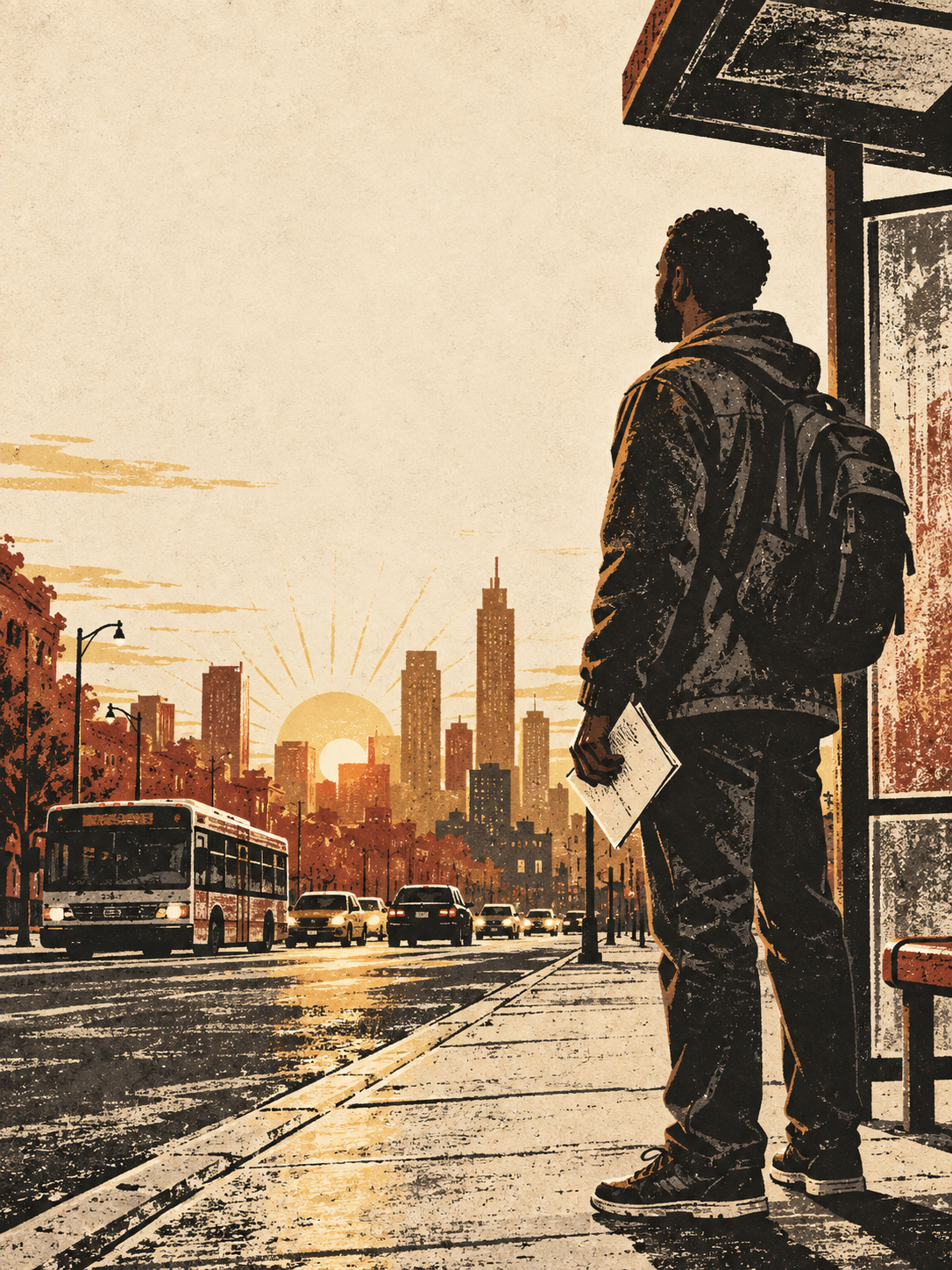
On his first morning home, Malik woke before the alarm. The room was quiet in a way that felt almost physical. There was no count, no line, no door opening on someone else’s schedule—only a cup of coffee, a borrowed phone, and a list of names.
The list began with a reentry navigator who did not ask him to summarize 17 years in one sentence. Together, they worked through the ordinary things that can feel enormous: an ID, a place to sleep, a bus route, a résumé, and the courage to walk into a workplace and tell the truth.
A second chance did not arrive as one big door. It came as a series of people who kept answering.
The work of becoming visible
Malik’s first job was not his dream job. It was a starting line. A supervisor who believed in fair-chance hiring gave him a schedule, a uniform, and room to learn. A mentor helped him translate skills from inside into language an employer could understand.
Months later, he describes progress less like a transformation and more like a practice: showing up, asking for help early, and making plans that leave space for the unexpected.
“I stopped waiting for permission to begin,” he says. “Now I’m learning how to keep going.”
Find practical next steps ↘